
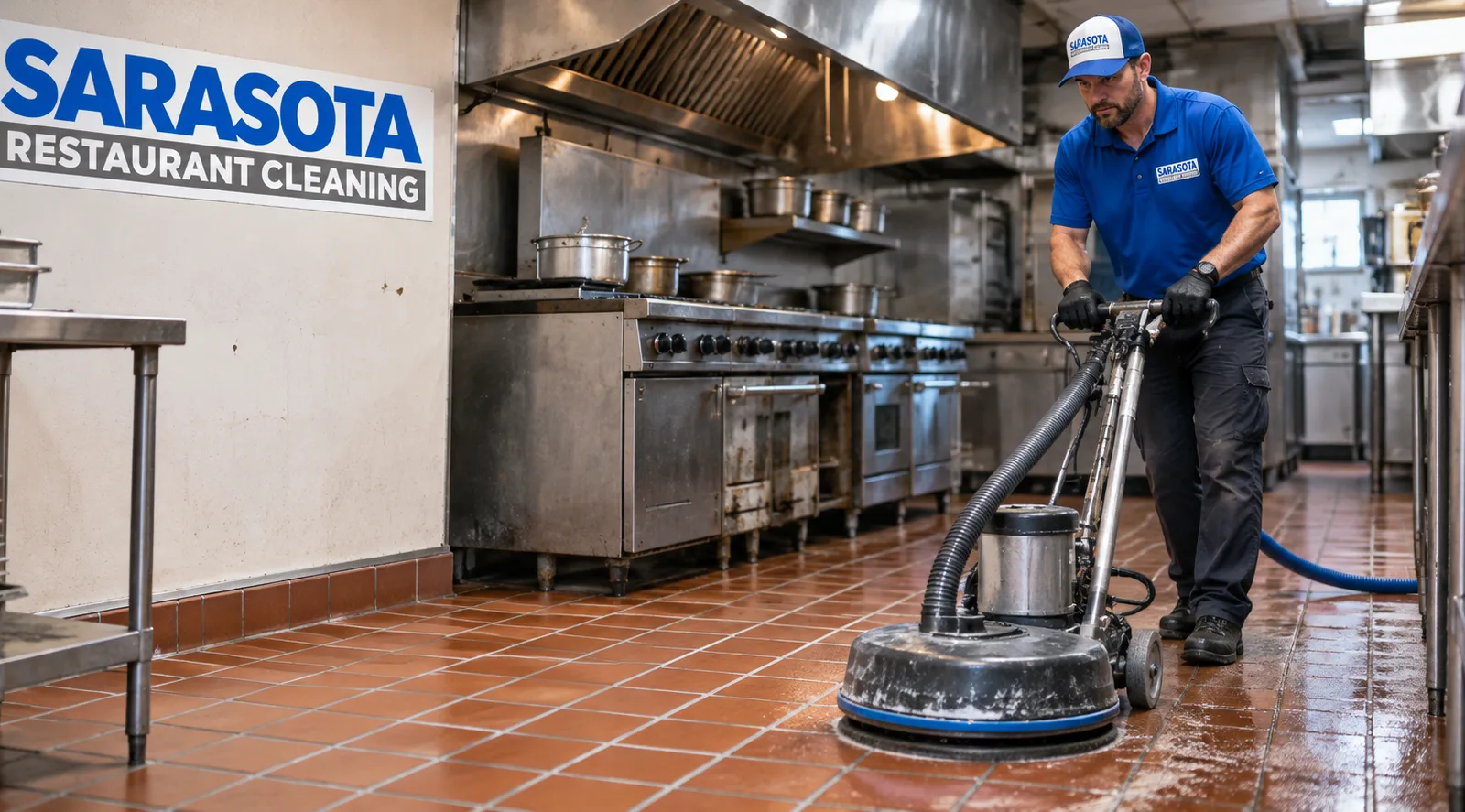
Commercial Kitchen Floor Cleaning
Remove grease, embedded soil, and dark grout buildup with a cleaning plan fitted to your flooring, kitchen schedule, and food-service operation.
A Deeper Clean for Working Restaurant Floors
Commercial Kitchen Floor Cleaning removes the grease film and compacted soil that routine sweeping and mopping can leave on tile, grout, and other hard flooring. Sarasota Restaurant Cleaning evaluates the floor material, buildup, drainage, equipment layout, and operating schedule before recommending a method. The aim is a visibly cleaner floor without careless chemical use or unnecessary disruption.
We provide Sarasota's local restaurant service that plans the work around the realities of an active kitchen: cook lines that accumulate aerosolized grease, grout joints that hold residue, narrow spaces beside equipment, and floor drains that require controlled water use. A written scope can identify the areas to be cleaned, the planned process, access requirements, and any stains or damaged surfaces that may remain after cleaning.
Restaurant kitchens near Downtown Sarasota and St. Armands Circle often work around busy dining periods, while operations near University Town Center may have scheduled receiving, prep, and closing windows. Those constraints affect access and timing. Sarasota's warm, humid climate can also slow natural drying, so ventilation, water recovery, and a clear reopening plan matter.
Kitchen Floor Degreasing Matched to the Surface
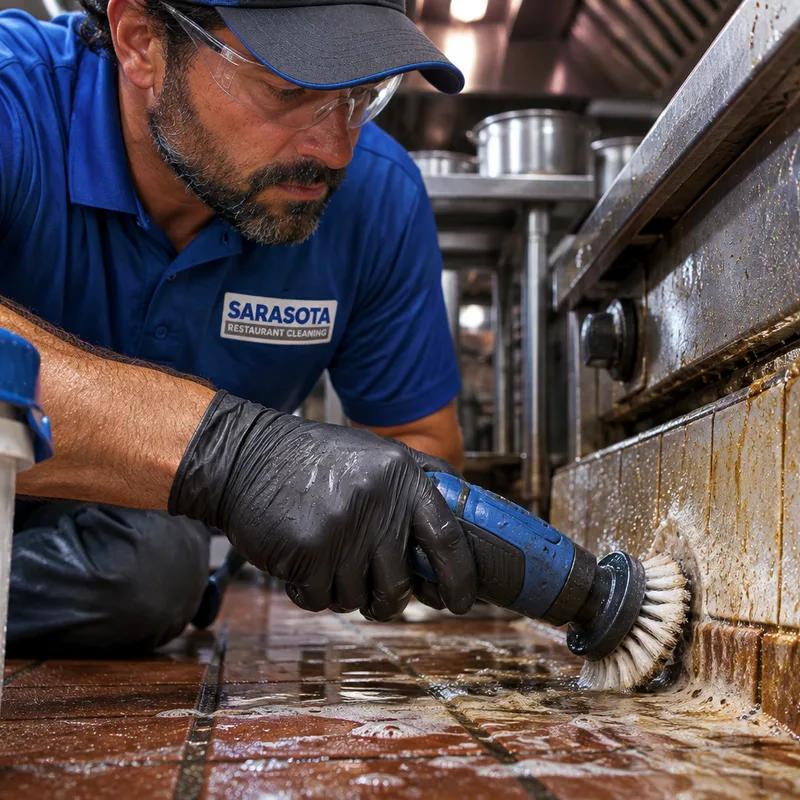
Effective kitchen floor degreasing starts with the right chemistry and dwell time. An alkaline degreaser can loosen fats, oils, and protein soils, but concentration must suit the flooring and the condition of the surface. The product needs enough contact time to work without drying in place. Mechanical agitation then reaches textured tile and low grout joints more consistently than a mop alone.
Quarry tile and commercial ceramic tile are common kitchen surfaces because they tolerate heavy use, but their texture and grout lines can trap residue. Sealed concrete, epoxy coatings, vinyl composition tile, and other resilient floors have different limits. Strong chemistry or aggressive tools can dull coatings, soften certain finishes, or expose weak grout. A test area helps establish a safe process before full production begins.
Water recovery is part of the job. Loosened grease should be collected rather than moved into corners or left around equipment legs. Floor drains are kept clear of debris, and wastewater handling must follow the facility's requirements. Cleaning does not repair loose tile, cracked grout, failed coatings, or inadequate drainage, but it can expose those conditions so management can plan the right maintenance.
Restaurant Floor Cleaning Services by Area and Condition
Cook Lines and Fryer Areas
These zones often need focused restaurant floor degreasing because airborne cooking oils settle on the floor and mix with tracked-in soil. Edges, equipment legs, and spaces around floor mats receive close attention.
Restaurant Tile Cleaning
Textured tile is agitated to lift residue from surface recesses. The method is selected for the tile type, coating condition, slip-resistant texture, and the amount of buildup.
Restaurant Grout Cleaning
Grout joints are treated as part of the floor rather than skipped between tiles. Cleaning can remove bonded soil, although permanently stained, eroded, or cracked grout may still need repair.
Prep and Dishwashing Zones
Food residue, detergent film, and frequent moisture can create a different soil load than cooking grease. Controlled application and recovery help clean these areas without spreading dirty water.
Walk-Ins and Storage Areas
Thresholds, shelving edges, and traffic lanes collect tracked soil and spills. Access may require moving light, movable items before work begins while fixed equipment remains in place.
Dining-Side Hard Floors
When included in the scope, commercial floor cleaning in Sarasota can address hard flooring near service stations and transitions while keeping the process separate from kitchen grease removal.
How Our Commercial Kitchen Floor Cleaning Process Works
-
01
Inspect the Floor and Soil
We identify the flooring, grout condition, grease concentration, drainage, access limitations, and areas hidden by movable equipment. Existing damage and stains are documented before cleaning.
-
02
Set the Scope and Timing
The work is arranged around prep, service, deliveries, and the time needed for drying. Staff receive clear instructions about clearing mats, carts, boxes, and other movable items.
-
03
Protect and Prepare
Loose debris is removed first. Sensitive surfaces are identified, and a test area may be used to check chemical response, agitation level, and the likely appearance after cleaning.
-
04
Degrease and Agitate
Appropriate cleaning solution is applied at the selected dilution and allowed to dwell. The floor and grout are mechanically agitated, with extra passes where residue is concentrated.
-
05
Recover, Rinse, and Review
Dirty solution is recovered, remaining residue is rinsed as appropriate, and the floor is reviewed under available lighting. The crew notes damaged grout, coatings, or persistent discoloration that cleaning cannot correct.
-
06
Return the Area to Use
The floor is left to dry with ventilation as conditions permit. Equipment and mats should return only when the surface is ready, and kitchen staff receive any applicable maintenance guidance.
Clean Results Depend on More Than Strong Degreaser
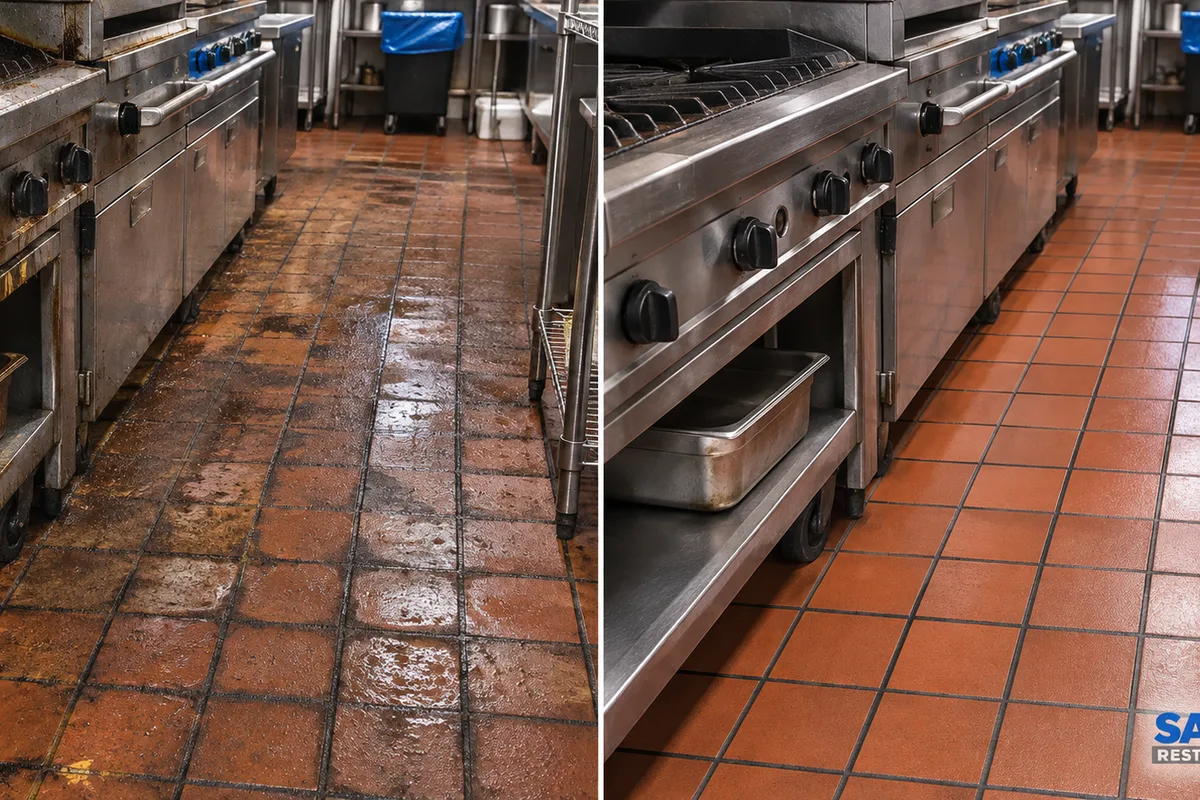
A stronger product is not automatically a better choice. Results depend on soil type, dilution, water temperature when permitted by the product, dwell time, agitation, recovery, and rinsing. Skipping any of those steps can leave a sticky film that attracts soil or makes a floor feel slick.
Restaurant tile cleaning also requires attention to grout depth and surface texture. A flat cleaning pad may pass over recessed joints, while a suitable brush can reach them more effectively. In corners and under equipment lips, hand detailing may be needed. Black or dark grout does not always indicate removable dirt; old repairs, absorbed staining, and material loss can affect the final appearance.
A floor-cleaning visit should complement daily care rather than replace it. Sweep or vacuum loose debris before mopping, use the correct daily cleaner at its labeled dilution, change dirty solution, and keep grease-laden tools separate from dining-area tools. Clean spills promptly, launder mats on schedule, and monitor recurring wet spots. Sarasota's humid conditions make standing moisture and airflow especially relevant when planning drying time.
Scheduling Restaurant Floor Cleaning in Sarasota
Restaurant floor cleaning in Sarasota is commonly planned outside food preparation and service. The right window depends on floor area, buildup, equipment access, ventilation, and when staff must safely return. A compact kitchen with open access may need a shorter visit than a large facility with multiple cook lines, heavily recessed grout, or years of accumulated residue.
Downtown loading access, St. Armands Circle traffic, and the delivery schedules around larger University Town Center operations can all affect arrival and staging. Siesta Key restaurants may also need cleaning timed around visitor-driven service periods and limited access. These practical details should be discussed before the appointment rather than handled after a crew arrives.
Preparation usually includes removing loose items, lifting or relocating floor mats, securing food and utensils, and identifying equipment that may be moved safely. Fixed or connected equipment should remain in place unless qualified personnel handle it. If the kitchen has a grease interceptor, special wastewater procedures, sensitive coatings, or restrictions on drain use, disclose those conditions during planning.
Request a CallbackDescribe the flooring, problem areas, kitchen hours, and preferred service window to receive a practical scope for degreasing the floor.
Call for a Free QuoteCommercial Kitchen Floor Cleaning Questions
How is commercial kitchen floor cleaning priced in Sarasota?
Pricing is based on cleanable floor area, floor material, grease level, grout condition, equipment access, and the service window. Heavy buildup, hand detailing, restricted loading access, or work divided around kitchen operations can add labor. An inspection or detailed description of the space is the best way to establish an accurate written scope.
Can restaurant floor degreasing remove slippery buildup?
Professional degreasing can remove grease film and residue that contribute to a slick surface, but it cannot correct every cause of poor traction. Worn texture, damaged coatings, soap residue, standing water, unsuitable mats, and drainage problems may also be involved. The floor should be assessed after cleaning, and the restaurant remains responsible for its slip-prevention and safety procedures.
Will restaurant grout cleaning make dark grout look new?
Restaurant grout cleaning can remove bonded soil, but it cannot promise a uniform new appearance. Grout may remain dark because of absorbed staining, erosion, failed repairs, or its original color. A test area can help distinguish removable buildup from permanent discoloration before the full kitchen is cleaned.
Can the kitchen reopen immediately after floor cleaning?
The kitchen can reopen after the floor is clean, dry enough for safe use, and any site-specific requirements are met. Drying time varies with ventilation, surface texture, grout depth, and Sarasota's humid conditions. The service window should include recovery, inspection, and drying rather than ending as soon as agitation stops.
Do restaurant floor cleaning services move kitchen equipment?
Light, movable items may be relocated when agreed in advance, but connected or fixed cooking equipment generally requires separate handling by qualified personnel. Staff should clear mats, carts, boxes, and loose supplies before the appointment. The agreed scope should state which areas will be accessible and which equipment will remain in place.
How often should a restaurant schedule kitchen floor degreasing?
The proper frequency depends on cooking volume, menu, flooring texture, daily maintenance, mat use, ventilation, and how quickly grease returns. A fryer line may need more frequent attention than a dry storage aisle. After the initial cleaning, the rate of recurring buildup provides a practical basis for setting a maintenance interval.
Is deep cleaning suitable for quarry tile, epoxy, and resilient flooring?
Deep cleaning can be adapted to many commercial floors, but the chemistry and agitation must match the material and its condition. Quarry tile often tolerates mechanical scrubbing, while epoxy coatings and resilient flooring may require gentler tools or different cleaners. A test area is appropriate when the floor type, coating history, or chemical resistance is uncertain.
Plan a Cleaner, Safer-Feeling Kitchen Floor
Tell Sarasota Restaurant Cleaning about the floor material, grease buildup, operating hours, and access concerns. We will help define the work and choose a service window that fits your operation.