
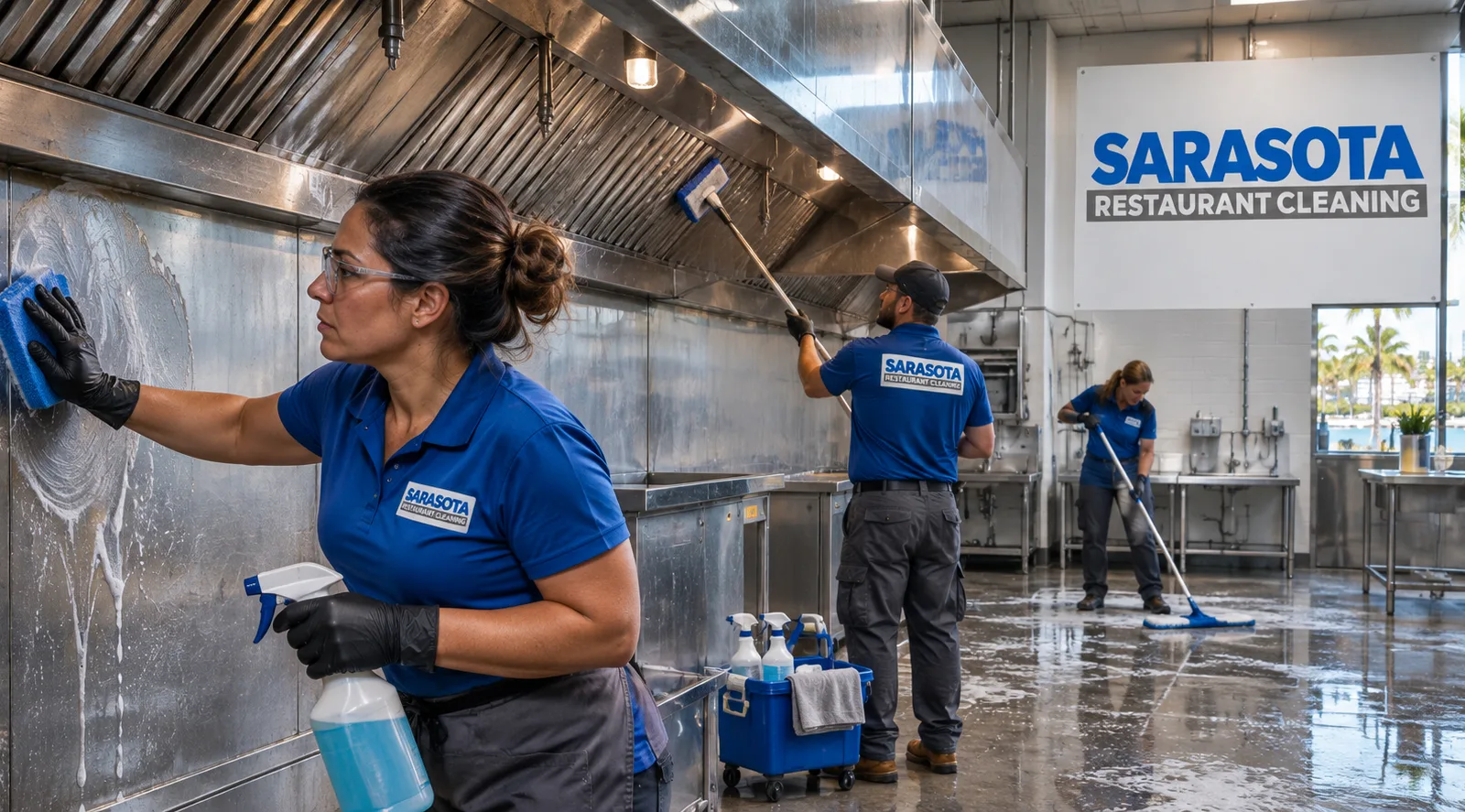
Kitchen Deep Cleaning
Detailed cleaning for restaurant kitchens, walk-in coolers and hard-to-reach surfaces, scheduled around your operating hours.
Detailed Care for Working Restaurant Kitchens
Kitchen Deep Cleaning addresses the buildup that routine opening and closing work may leave behind. Grease mist settles on equipment sides, pipes and high surfaces. Food debris collects beneath movable units and along wall-to-floor junctions. Cooler shelves, gaskets and fan guards also need periodic attention beyond daily wiping.
Sarasota Restaurant Cleaning plans the work around your kitchen's layout, condition and operating schedule. Our team applies the same practical care to each work area: defining the scope, confirming access and completing the agreed tasks methodically. Our office at 2542 12th St, Suite 4 places the team within Sarasota for local scheduling.
Sarasota's warm, humid climate makes moisture control especially relevant in walk-ins, dish areas and other cool or damp zones. Busy dining districts create another constraint: kitchens near downtown Sarasota and St. Armands Circle often need carefully timed work because service windows, deliveries and limited access can overlap. Restaurants around Gulf Gate and Southside Village may have compact back-of-house layouts, while larger commercial properties near University Town Center can require zone-by-zone scheduling.
What Restaurant Deep Cleaning Services Can Cover
Cooking-Line Detail Cleaning
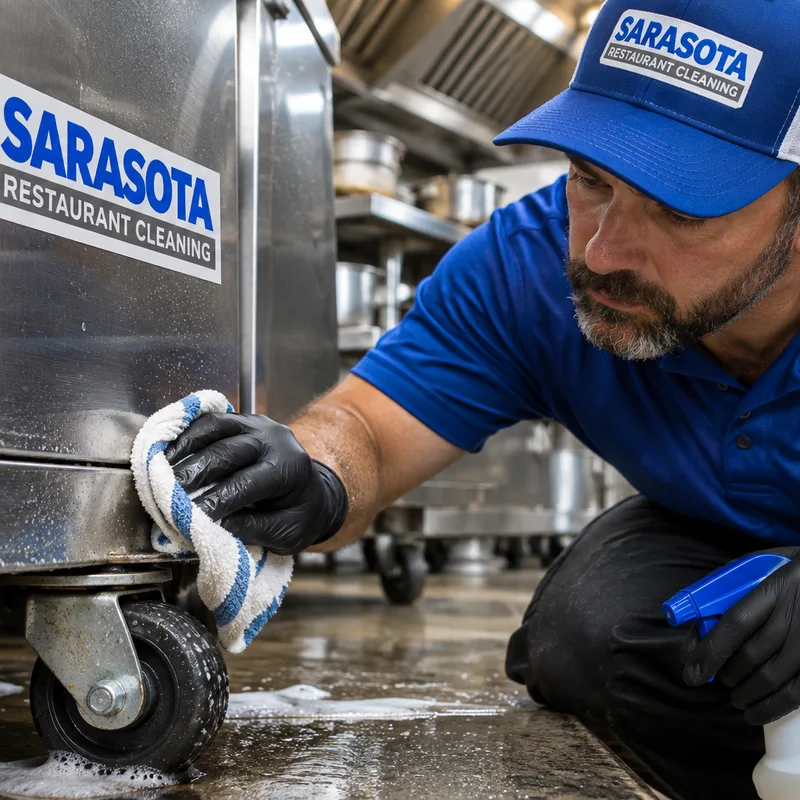
Degreasing and cleaning accessible equipment exteriors, sides, legs, casters, splash areas and the floor beneath movable units. Hood and duct exhaust-system cleaning is treated as a separate specialist scope.
Walk-In Cooler Cleaning
Cleaning empty shelving, interior walls, floors, door tracks and accessible gasket surfaces after food is removed or safely relocated. The plan accounts for temperature control and limits how long the door remains open.
High Dusting
Removal of dust and residue from accessible overhead pipes, ledges, vents and structural surfaces using suitable extension tools or access equipment. High Dusting Sarasota work is scoped by height and safe access.
Floors, Edges and Drains
Detailed attention to floor edges, corners, grout lines and accessible drain surrounds where soil can remain after routine mopping. Drain interiors, plumbing repairs and pest treatment require the appropriate specialist.
Prep and Storage Areas
Cleaning of cleared racks, shelving exteriors, wall surfaces and reachable spaces beneath worktables. Food, utensils and smallwares must be protected or removed before cleaning begins.
Dish and Utility Areas
Removal of grease, mineral film and splash residue from accessible non-food-contact surfaces around sinks, dish machines and utility zones, according to the products suitable for each material.
Commercial Kitchen Deep Cleaning in Sarasota
A useful scope is specific enough for a manager to verify. It should identify each room or zone, the surfaces included, exclusions, equipment that may be moved, access requirements and who is responsible for clearing food or smallwares. A vague promise to clean the entire kitchen can create gaps once work begins.
Professional Restaurant Deep Cleaning also requires product and surface compatibility. Stainless steel, quarry tile, sealed grout, FRP wall panels, rubber gaskets and painted surfaces do not all tolerate the same chemistry or agitation. Degreasers need the correct dwell time, and food-contact surfaces require appropriate rinsing or sanitizing according to product directions. Safety data sheets should be available for the chemicals used.
The distinction between cleaning and sanitizing matters. Cleaning removes grease, food soil and other residue. Sanitizing is a separate step performed on a previously cleaned surface with an approved product at its labeled concentration and contact time. A detailed scope states whether food-contact sanitizing is included.
How We Plan a Restaurant Detailed Cleaning
-
01
Review the Kitchen and Priorities
We discuss operating hours, problem areas, recent cleaning history and the result the manager expects. An on-site review may be needed to assess access, equipment density, surface condition and overhead work.
-
02
Set a Written Scope
The plan identifies included zones, exclusions, prep responsibilities and timing. We also confirm whether equipment can be moved, which utilities may be shut down and whether staff or another vendor will remain in the kitchen.
-
03
Prepare and Protect
Food, utensils and exposed smallwares are removed or protected. Equipment is cooled and disconnected by an authorized person when required. Wet-floor controls and chemical labels remain visible during the work.
-
04
Clean in a Controlled Order
Work generally proceeds from high surfaces to low surfaces and from cleaner zones toward heavier soil. Crews follow the approved scope while controlling overspray, wastewater and cross-contamination.
-
05
Inspect Before Reopening
The manager reviews the completed areas, notes any access limitations and confirms that affected surfaces are dry or ready for the next required step. Equipment startup remains with authorized restaurant personnel.
Walk-In Cooler Cleaning Requires Careful Preparation
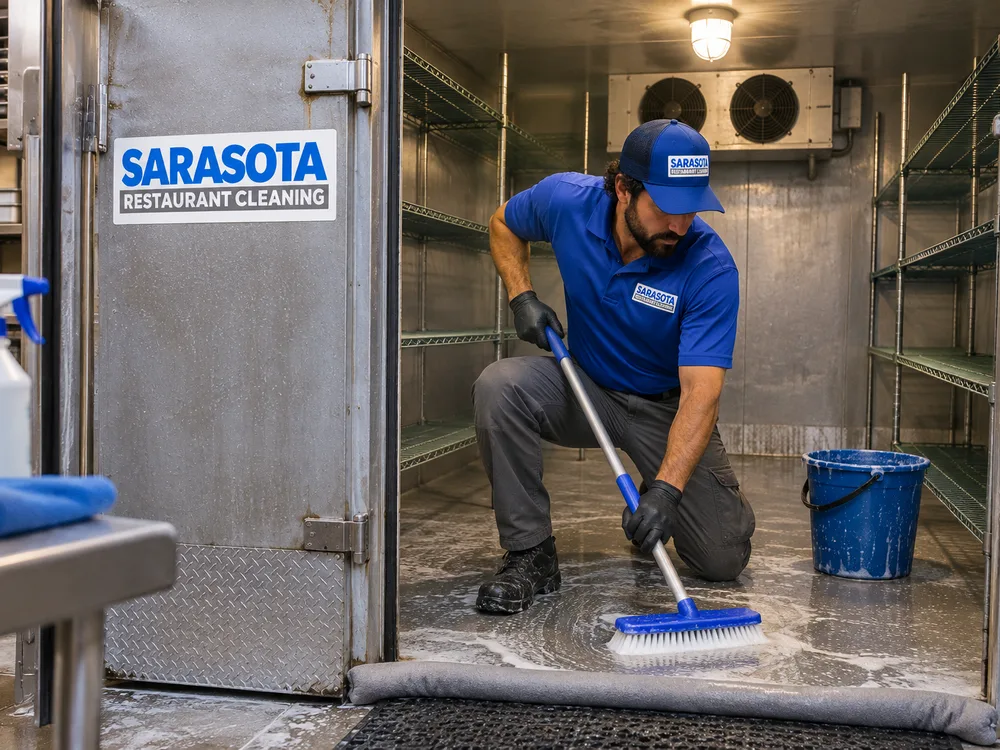
Walk In Cooler Cleaning should be planned around food safety and refrigeration needs. The restaurant is responsible for relocating or protecting food before interior surfaces are cleaned. Shelves may need to be emptied in stages, and the door should not remain open longer than the agreed work requires.
Cleaning can address spills, residue, shelving, walls, floors, tracks and accessible gasket surfaces. Heavy ice, standing water, damaged seals or a cooler that cannot maintain temperature may signal an equipment or drainage problem rather than a cleaning issue. Those conditions should be addressed by a qualified refrigeration or plumbing professional.
The evaporator assembly also needs clear boundaries. Accessible exterior guards may be included when safe, but electrical components, coils and fan assemblies should not be saturated or disturbed without the proper procedure and authorization. After cleaning, restaurant staff should verify operating temperature before food is returned.
How Much Does Kitchen Deep Cleaning Cost in Sarasota?
Kitchen deep cleaning in Sarasota typically costs about $500 to $1,500 for a smaller restaurant kitchen, while large kitchens, heavy grease conditions or multi-zone projects may run $1,500 to $4,000 or more. Limited-area work may cost less.
Final pricing depends on square footage, soil level, equipment density, overnight scheduling, high-access work, cooler size and whether equipment must be moved. Exhaust-system cleaning, repairs and specialty remediation are usually separate. The exact cost is confirmed after a site review and written scope.
Request a CallbackChoosing Professional Restaurant Deep Cleaners
Ask prospective Restaurant Deep Cleaners for a written task list rather than a broad promise. Confirm which chemicals and tools will be used, how food-contact surfaces are handled, whether high work requires ladders or other access equipment, and what must be completed by your staff before arrival. The restaurant should also identify restricted areas, delicate equipment and approved utility shutoffs.
Scheduling should match the real operating window. A kitchen that closes late, receives early deliveries and starts prep before sunrise may need work divided into zones or completed on a planned closure day. Restaurants near Siesta Key and St. Armands Circle may also want to account for seasonal visitor traffic when selecting a service date. A realistic window is better than rushing through heavy buildup.
Frequency depends on cooking volume, menu, ventilation, staffing and the effectiveness of daily cleaning. Frying and charbroiling tend to create heavier airborne grease than low-grease preparation. Periodic deep cleaning supports daily sanitation work, but it does not replace staff routines, equipment maintenance or required exhaust-system service.
Share your kitchen layout, operating window and priority areas so we can define a practical scope before work is scheduled.
Call for a Free QuoteKitchen Deep Cleaning Questions
How long does Restaurant Deep Cleaning in Sarasota take?
A small kitchen may be completed in one overnight window, while a large or heavily soiled facility may require a longer closure or phased work. Equipment density, high dusting, cooler cleaning and the amount of preparation all affect duration. The working window should account for Sarasota restaurant closing times, early deliveries and the time required for surfaces to dry before prep resumes.
Can kitchen deep cleaning be completed while the restaurant is open?
Most intensive work is best completed after food production stops or within a fully isolated zone. Degreasing, wet floors, equipment movement and overhead dust removal can interfere with safe kitchen operations. If phased work is practical, the written plan should identify barriers, staff routes and which areas must remain out of service.
Do we need to remove food before Walk In Cooler Cleaning?
Yes, exposed food should be removed, safely relocated or protected according to the agreed plan before interior cooler cleaning begins. Restaurant staff should manage food temperatures and confirm that the cooler has returned to its required operating condition before restocking. Cleaning crews should not make food-disposition decisions for the operator.
Is High Dusting Sarasota work included?
High dusting can be included when the surfaces, heights and access method are identified in the scope. Overhead pipes, ledges, vents and structural surfaces may require extension tools or specialized access equipment. Areas over active food preparation must be cleared and protected before residue is disturbed.
Does kitchen deep cleaning include hood and exhaust duct cleaning?
Hood, fan and duct cleaning should be treated as a separate specialist scope unless it is explicitly listed in writing. Cleaning visible exterior hood surfaces is different from servicing the grease-removal devices, exhaust ducts and rooftop fan. Restaurant managers should keep the documentation provided by the qualified exhaust-system contractor.
How often should a restaurant schedule detailed cleaning?
The right interval depends on cooking methods, volume, daily cleaning quality and how quickly grease or food soil returns. A high-output fry line may need detailed attention more often than a light-prep kitchen. Managers can set a practical schedule by documenting recurring buildup during routine inspections and scheduling service before it becomes difficult to remove.
Plan a Cleaner, More Workable Kitchen
Tell Sarasota Restaurant Cleaning which areas need attention and when your kitchen is available. We will help define the preparation, access and detailed cleaning scope for your restaurant.